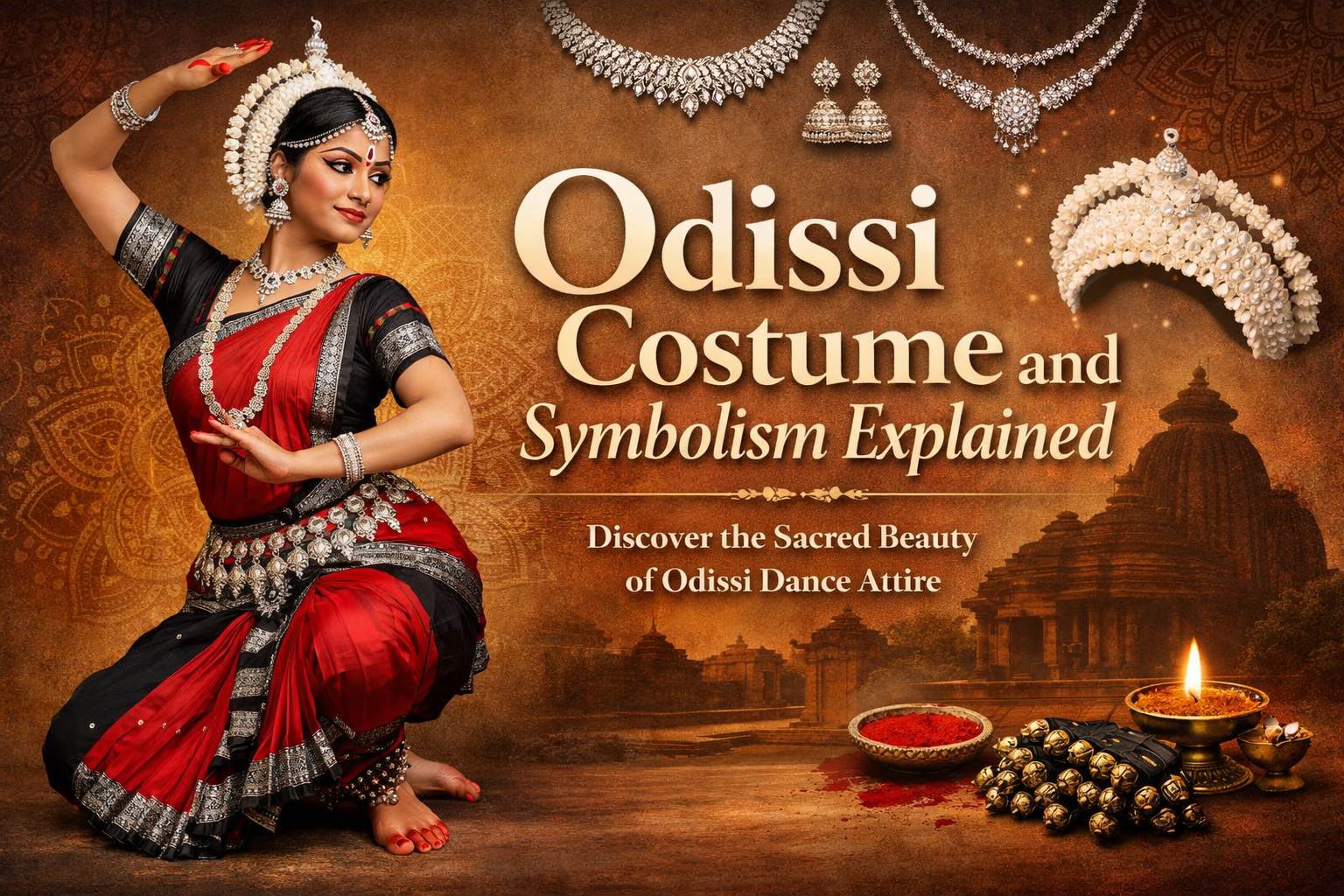
Odissi is not just a dance form. It is a living temple tradition and a moving prayer.
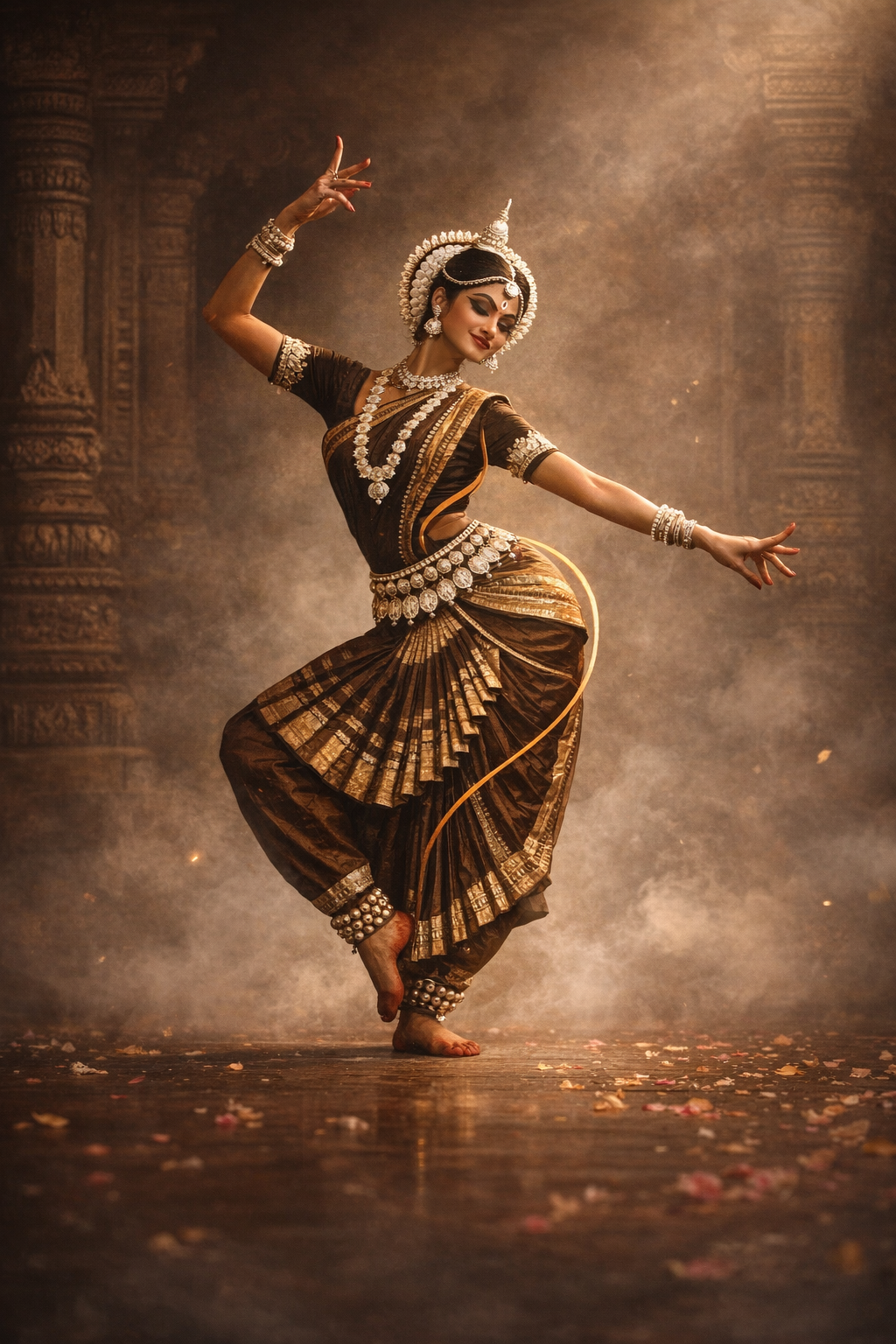
One of its most breathtaking aspects is the costume. At first glance it may look purely elegant, but every piece carries symbolic meaning related to divinity, devotion, femininity, and sacred geometry.
This guide explains what the Odissi costume consists of, why it looks the way it does, and what each element represents for dancers, students, parents, and culture enthusiasts.
Why the Odissi Costume Is So Special
Unlike many stage costumes that focus mainly on performance beauty, Odissi attire is deeply influenced by:
- Jagannath culture of Odisha
- Temple sculptures
- Devadasi traditions
- Sacred geometry
- Spiritual femininity
Odissi dancers are styled like living temple sculptures, not just performers.
Costume language evokes:
- A goddess
- A celestial apsara
- A temple dancer
- A divine storyteller
Main Parts of an Odissi Costume
The costume can seem complex, but it is built from clear foundational elements.
1. The Saree or Costume Fabric (Base Layer)
Traditional Odissi costume uses handwoven Odisha textiles such as:
- Sambalpuri
- Bomkai
- Khandua
- Kotpad
These are chosen for cultural identity and historical links to temple offerings.
Symbolism of the fabric:
- Purity
- Devotion
- Cultural roots
- Divine offering
2. The Pleats (Iconic Fan Shape)
The front pleated fan creates the sculptural effect in tribhangi and chowka. In Odissi, pleat behavior is designed to highlight hip curve and flowing side movement.
Symbolism of pleats:
- Lotus flower imagery
- Temple architecture lines
- Unfolding spiritual energy
- Feminine principle (Shakti)
As the dancer moves, pleats opening and closing resembles a blooming lotus.
3. The Blouse (Kanchula)
The blouse is fitted to support arm mobility and torso structure while preserving elegance.
It symbolizes discipline, control, and the balance between softness and strength.
4. The Waist Belt (Bengapatia or Belt)
Practical purpose:
- Holds the costume in place
- Keeps pleats aligned
- Stabilizes movement
Symbolic meaning:
- Energy control
- Spiritual center awareness
- Connection to earth and rhythm
Odissi Jewelry and Ornaments (The Sacred Temple Look)
Odissi jewelry is inspired directly by Odisha temple sculpture aesthetics and traditional filigree craft.
.png)
5. The Silver Jewelry Tradition
Unlike many other classical forms that favor gold, Odissi traditionally uses silver.
Silver is linked to Odisha temple culture and associated with:
- Purity
- Moon energy
- Divine femininity
- Calm devotional mood
6. Necklace Sets
Odissi dancers often layer choker, medium, and long necklace sets.
Layering symbolizes spiritual richness and divine adornment.
7. Earrings (Kapa or Jhumkas)
Sculptural earrings frame facial expression and symbolize receptivity to divine sound, rhythm, and mantra.
8. Bangles and Armlets
Bangles often symbolize rhythm, grace, and prosperity.
Armlets symbolize strength, protection, and latent warrior energy within feminine softness.
The Most Sacred Element: The Odissi Headpiece
9. Matha Patti (Head Ornament)
The forehead band represents spiritual awakening, divine focus, and awareness centered around the ajna region.
10. Tahiya (Odissi Crown / Hair Ornament)
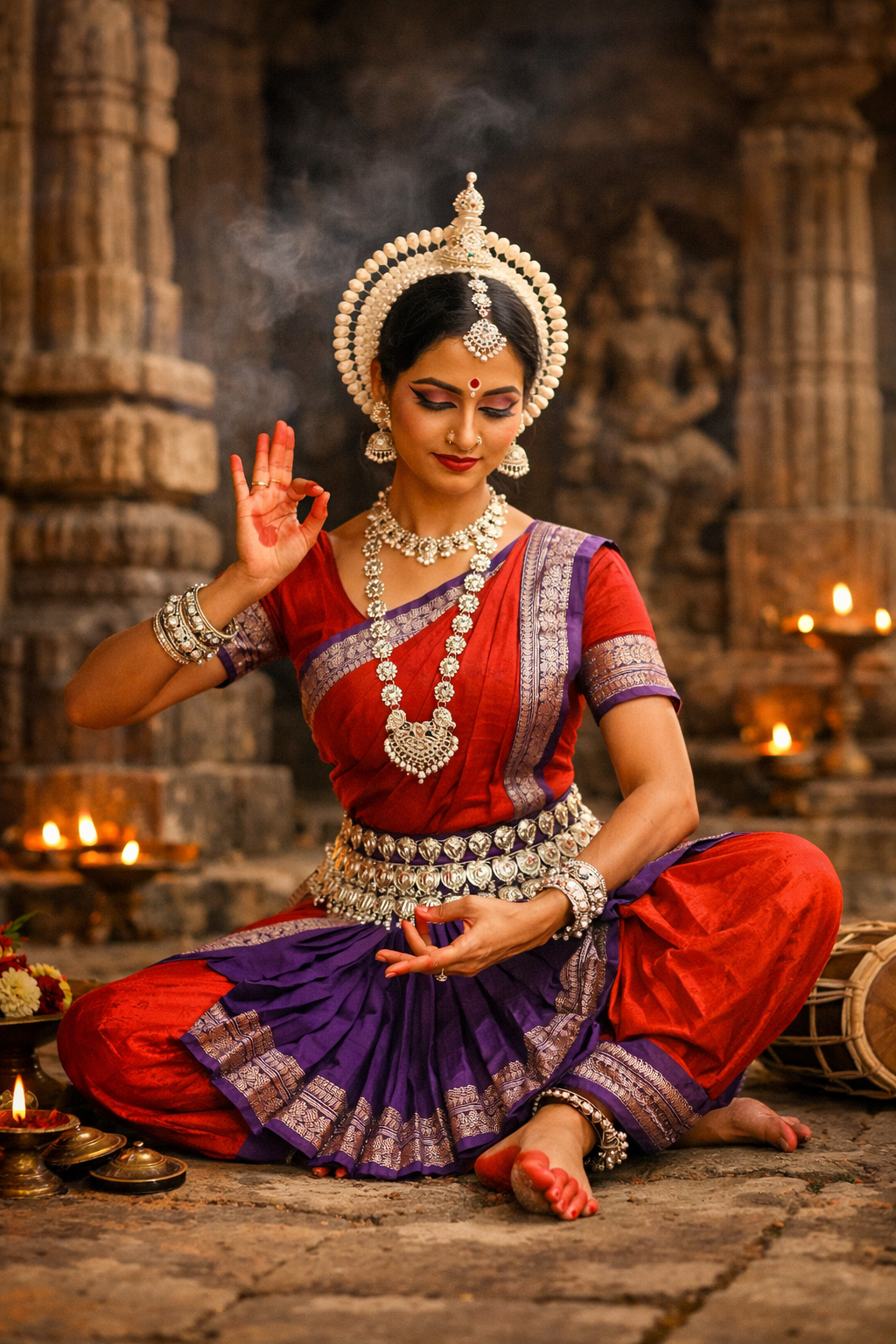
The iconic white crown-like structure on the bun is traditionally made from shola and floral material.
Tahiya symbolizes:
- Purity
- Lotus bloom
- Divine halo
- Temple goddess energy
Odissi Makeup Symbolism
Odissi makeup is controlled and symbolic, designed for expressive clarity rather than excess.
Key elements include:
- Bold eyes for abhinaya readability
- Red alta on feet and hands
- Classical lip and facial definition
Its purpose is to amplify storytelling and temple-sculpture presence on stage.
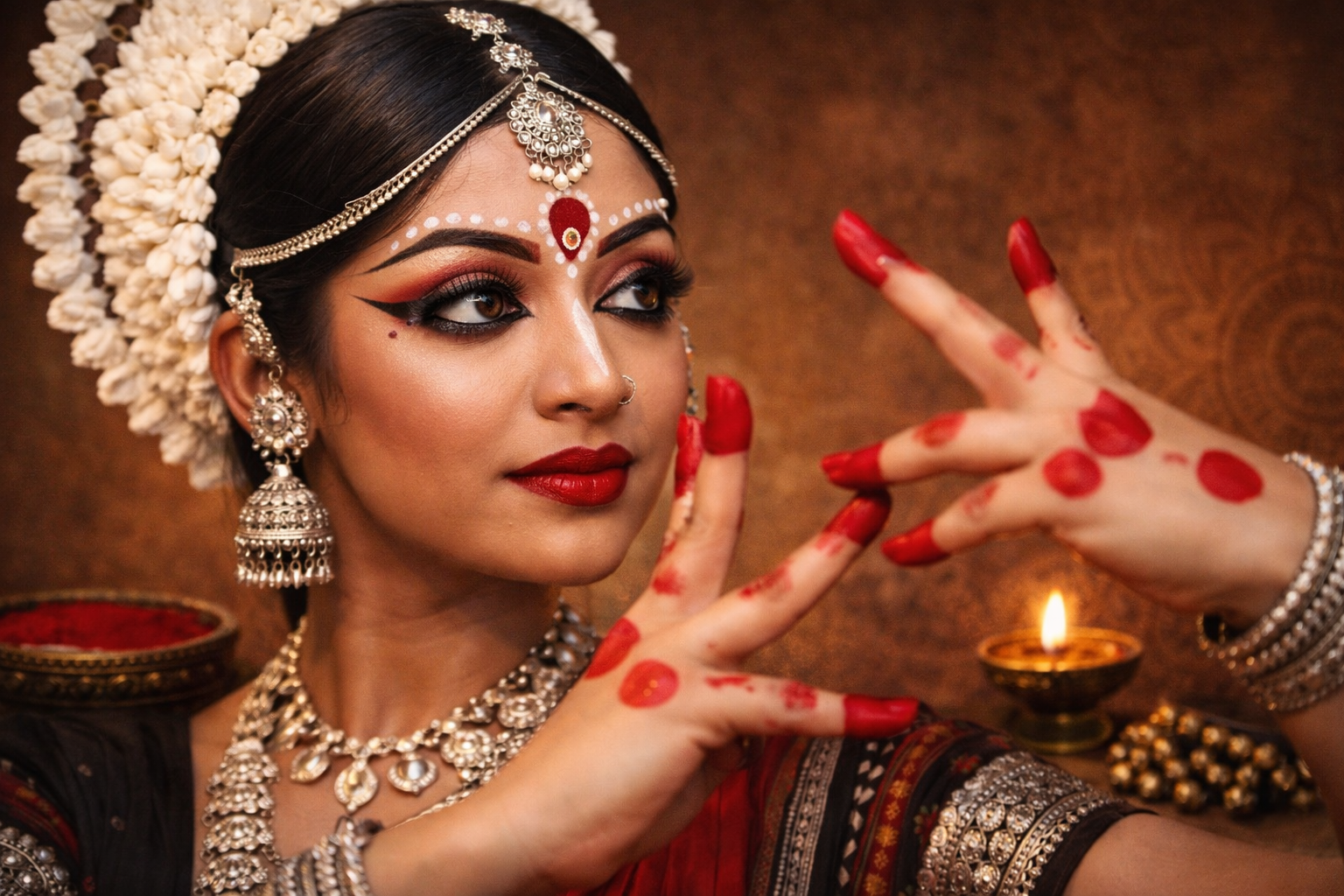
Alta: The Sacred Red Dye
Alta is applied to feet, hands, and sometimes fingertips.
It symbolizes:
- Auspiciousness
- Devotion
- Sacred femininity
- Shakti and red lotus energy
The Ghungroo (Ankle Bells)
In Odissi, ghungroo are not only musical accessories. They are respected as sacred instruments.
They represent discipline, dedication, and spiritual commitment to dance practice.
Odissi Costume Colors and Their Meaning
- Red: Shakti, sacred power, passion
- White: Purity, peace, devotion
- Yellow: Spiritual joy and prosperity
- Green: Life energy, nature, fertility
- Blue: Krishna, devotion, infinity
- Black (modern use): dramatic contrast and mystery
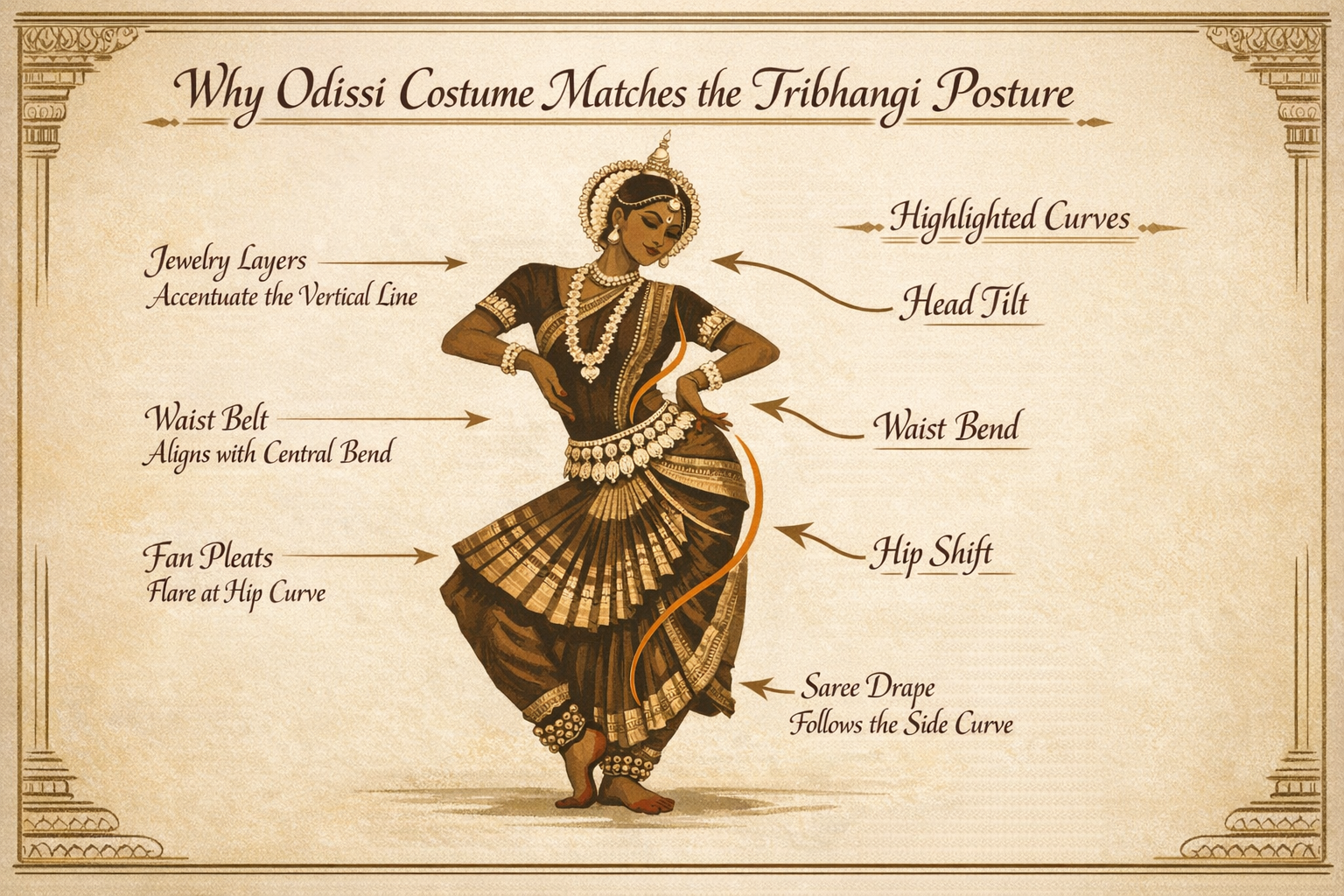
Why Odissi Costume Matches the Tribhangi Posture
Tribhangi (three bends at neck, waist, and knee) is central to Odissi identity, and the costume is designed to highlight it.
The silhouette supports tribhangi through side draping, sculptural pleats, and waist emphasis.
This reflects sacred body geometry and feminine power with control.
Odissi Costume as Temple Sculpture Art
Temple sites like Konark, Jagannath, and Lingaraj reveal sculptural references that shaped Odissi attire.
Odissi costume intentionally recreates the visual grammar of temple dance sculpture.
Meaning: carved stone devotion transformed into living movement.
Modern Odissi Costume Variations
Contemporary productions may use lighter fabrics and stitched convenience versions.
Even then, symbolic essentials should remain intact:
- Sculptural silhouette
- Temple-style ornaments
- Spiritual elegance
Why Odissi Costume Matters for Performance
A well-fitted costume affects technical and expressive quality directly.
- Improves posture support
- Enhances tribhangi lines
- Keeps movement visually clean
- Strengthens facial storytelling impact
- Creates powerful stage presence
Many dancers feel transformed in costume because it is not only clothing, it is artistic identity.
Final Thoughts: Odissi Costume Is a Sacred Language
Odissi costume is one of India's great cultural treasures because it is symbolic, not merely decorative.
It carries temple devotion, feminine divinity, Odisha heritage, discipline, and sacred art history.
An Odissi dancer does not just wear fabric; she wears a living tradition.
Frequently Asked Questions (FAQ)
What is the Odissi dance costume called?
Usually an Odissi dance saree or stitched Odissi costume, paired with silver jewelry and Tahiya.
Why do Odissi dancers wear silver jewelry?
It reflects Odisha temple tradition and symbolizes purity, calm devotion, and divine feminine energy.
What is the white crown in Odissi called?
It is called Tahiya, traditionally made from shola (pith flower material).
What is the red dye on hands and feet called?
It is Alta, symbolizing auspiciousness, devotion, and sacred feminine power.
Is Odissi costume different from Bharatanatyam costume?
Yes. Odissi costume is built to emphasize tribhangi and Odisha temple sculpture-inspired drape lines.
Want to Learn Odissi the Right Way?
Odissi is discipline, devotion, storytelling, rhythm, and sacred posture. Strong training includes both movement and meaning.
To learn properly, study symbolism and tradition alongside technique.
Learn Odissi With Proper Traditional Guidance
Follow our school for classes, workshops, and online guidance rooted in authentic Odissi practice.